Thursday, May 19, 2011

May meetup - Green Drinks

The last meetup had a small turnout. However, as always, there's always something new to learn. There are many ways people can make our economy more sustainable than it is right now.

For example, in the image on the right is a gentleman who's holding up a blacktop substitute made of recycled tires! Not only does it save waste material from going into our landfills, the roadway surface itself has some rather unique properties.

Since the material is made of former rubber tires, it retains it's shape well. That means vehicle indents due to being set in a parking area are self-repairing. It also is a material that is less susceptible to freeze damage. If water freezes, asphalt is damaged. However, the crevices in that material can allow for ice expansion without being damaged. Also, due to being porous, it passes water through to the underlying ground. This eliminates the need to build water runoff evaporation areas for parking lots. As for cost, it's a bit more per foot than average blacktop. However, areas covered in this surface need less maintenance.

Anyway, it demonstrates that it's sometimes possible to re-purpose former waste materials into something useful. Not only is it sometimes possible, but it's sometimes even profitable!

Wednesday, May 11, 2011

Media Politics 101. If too many turnout, repeat forum.

There may be some local media bias when it comes to the decision to allow hydrofracking in the area. For example, here's a photo of what appears to be a presentation by our mayor Quill with our former mayor in a place somewhat resembling a city hall like building. However, it wasn't city hall at all! It was at Willard Memorial Chapel. The photo showing empty pews suggests that nobody is interested in the issue. However, the turnout at the last city hall meeting suggests otherwise.

The recent public forums may be related to governor Patterson's final legislative act before he left office to have the DEC investigate hydrofracking and issue permits no earlier than June 2011. So, politicians all around New York are testing public tolerance to the idea of trading renewable water for a short term budget boost.

The fact is, even if pure distilled water were used, the hydrofracking idea is inherently dangerous. No matter what liquid is used, there are going to be nasty things forced up along with the gas. Substances that currently are in an inert state will be disturbed and be introduced into the groundwater. There is no safe way. Doing so is simply a trade of long-term groundwater for short-term money.

Not that the local economy would get much of that. An assumption by politicians is that operations such as this will at least be a temporary a boom to the local economy. However, former oil towns, coal towns and gas towns suggest resource extraction rarely benefits the community. In town after town, the money goes away but the pollution stays. Put it this way. If only your neighbor were to get rich from a hydrofrack lease and you only got potholes in your roads, polluted water and a property tax increase to fix it all, would you still be in favor of it?

Thursday, May 5, 2011

Hydrofacking and city hall

In an ideal world, one would take turns governing and being governed. So, I decided to take a trip down to City Hall to see how things were going. Rumor had it that hydrofracking was on the table for discussion.

The first issue was a presentation of a petition to the council to stop accepting tanker trucks full of hydrofrack water into the municipal water treatment system. The woman presenter spoke of the dangers of hydrofracking. They include brackish water (salt), suspended metals and in some cases radio nucleotides. For evidence, she urged the council members to view the movie "Gasland." She also submitted a petition to the council.

Then an opportunity for comment was offered. After the mayor asked again if anyone wanted to speak to the whole council, this was the only time to do so. So, seizing the opportunity, I decided to do an impromptu comment on the matter of energy depletion. I stated I didn't know all the issues behind hydrofracking but from what little I did know, it sounded like a really bad thing. (I also offered to add my name to that petition). However, I wanted to state how it was important to let people know that there are alternatives to home heating. I suggested that heat pumps might be a reasonable alternative to burning natural gas and incentives (or at least lack of penalties) should be in place to encourage their use. They would reduce the need for energy and also potentially stimulate the local economy due to a local company selling them plus there would be a need for local labor to install them. To the mayor's credit, he did point out that some government buildings were heated in this way.

Then, on to scheduled business. The next gentleman named Terry Cuddy got more specific on what he wanted the council to do. He wanted, with the support of a long winded petition, to stop the practice of the city accepting hydrofracking water for processing. Reaction by the council members was to have a closed door session. No resolution was introduced nor voted upon but it did show the council was taking the matter seriously. I also found a major mystery to me was solved. Turns out the Green Drinks I host is at the same time this organization meets. Not that it's a bad thing. However, it might mean Green Drinks may go to another time.

Other issues were brought up and voted upon that probably would qualify as "regular business". Among them, initiatives to encourage tourism. Also, a new program to put "Trisha" on the road to sell businesses the idea of having their activities in Auburn.

After the meeting, I met with Gilda from the city council. She seemed very bright and very responsible which was refreshing to see. Apparently she felt really strongly against the Iraq war. That alone scored major points with me! I think she feels as I do, that the best way to affect government change is from within. So, we started talking about the issues.

I learned a few things. Potentially the most interesting finding was how much money the gas companies offer the city to truck in their water! In some cases, hundreds of thousands. So, the temptation is understandably great to process some waste water to make the city budget balance a bit better. However, what was more interesting was finding out sampling is only taken from specific locations at specific times for what goes in the processing plant. No monitoring, specific to hydrofracking contamination, is done on the output. Very interesting that they have that restriction. Other issues are that the Owasco lake outlet is used both for releasing treated water and also for clean water. I suggested that rules, being what they were, may not sit well with the public. Although the city needs to comply with DEC and EPA rules, it might also be wise that the city verify water quality using an independent source such as a university since there are many people (myself included) that don't totally trust the influences of government. Even if not official, it would probably lend credibility to monitoring. The GIS program at CCC also has access to satellite remote sensing data. I suggested that data could be gathered now to used to monitor environmental changes. Right now, we could establish a baseline.

I also talked a bit about my renewable experiments (of course). She also listed some renewable activities Auburn is doing such as using digesters for methane and experimenting with using dried sewer sludge pellets as a possible power source rather than being trucked to another landfill as is currently the practice. She sensed that I might have some good ideas so she told me of an organization called "Ignite". This organization (or maybe another one) is helping the city review under used properties that could be cleaned up with the assistance of grants (perhaps for brownfield locations). If so, it sounds like a very good organization to be involved with. So, on her advice, I'll probably be checking it out.

Tuesday, April 19, 2011

Sustainable Skill Share visit

One of the newest buildings in Syracuse was the location of an event called Sustainable Skill Share. This event was sponsored by ESF of Syracuse. One thing that is rather unique about this building is that it's roof is covered with vegetation! Since it was early spring, the plants were still dormant. However, it won't take long before the roof is totally covered in vegetation!

Inside, there were 12 sessions so it unfortunately wasn't possible to go to all of them. However, here's a sampling of some of them.

Mycology (study of mushrooms). Lots of talk and lots of images. There are apparently lots of tasty mushrooms in the area along with some deadly ones!

Riki relaxation, if delivered by a trained Riki person, seems to work. It's truly amazing!

A Spirituality session is a good way to appreciate how fortunate we are when it comes to having the gift of life.

The highlight of the day was...composting! First, gathering compost from kitchen scraps need not be a smelly exercise. There are kitchen vessels of stainless steel that have carbon filters built right into the top cover!However, these containers look quite expensive. So, for those who are value shopping, it's also possible to construct a "worm box" out of peg board. Just load up with food scraps, newspaper and some "red wiggler" worms. Of course there's more than one way to process scraps into nutrients. The favored way is simply to make a big pile in a yard and it will usually attract bacteria, molds and other creepy-crawly creatures to break down the pile. Then, it's VITAL that these finished components are separated and sit for about a month before being used anywhere else. Ideally, in a dry well ventilated location. That way the Bugs/worms/bugs/weeds eventually starve and don't infect plants where the compost will eventually go.

The last exhibit was a static display. While there was no presenter for this, there was some literature that gave some clues to what this device did. It looks like it uses small water cooled elements at the focal point of several Fresnel lenses that track the sun. Together, an array of these looks like they could absorb both water and PV energy with a minimum of rare earth materials. The photo on the left shows what appears to be a test set of these. A much larger array of these units are mounted to the side of the building. Maybe this approach will be basis of energy technology of tomorrow or it might be a boondoggle. Time will tell. Either way, it shows that smart people are giving alternative energy some serious thought!

Friday, December 17, 2010

The importance of not being a "downer" when saving the world

The fact is, there have always been some at the top and others at the bottom. Sometimes the world seems to be modeled as Charles' Dicken's novel. Once you realize that quite a few people have more in common with Bob Cratchet than Scrooge, it's easy to get depressed. Along with the depression that sometimes comes with truth, there is frequently an even greater danger to any would-be activist. You become a bore. People are emotional beings after all. So it's the rare person who will choose to be with the "Debbie Downer" types during their leisure time.

The problem of unintentionally alienating people with one's own feelings is a very old problem. Fortunately, our libraries are filled with books full of solutions. One of them is Dale Carnegie's book on "How to win friends and influence people". I highly recommend the book. The techniques it describes offer hope that we all have some control of our fate by what we say and how we present ourselves. Such skills will be critical in making life worth living no matter what challenges the economy or environment throw at us. We can't always be happy all the time. However, the occasional little kindness of remaining silent on depressing topics sometimes is the greater service. After all, there is a time and place for everything.

Friday, November 26, 2010

Field trip to a hydroponic greenhouse

Jean Siracusa was kind enough to show off her geothermal heated hydroponic greenhouses. Her son, Marty and a few other part time employees maintain the operation. The first crop I saw was fresh lettuce which they sell to several high-end restaurants in the area. They also grow hydroponic tomatoes, cucumbers and other crops as well. Some of the crops from heirloom seeds taste...simply amazing. By maintaining ideal conditions, the plants have an impressive growth rate which also means an impressive harvest rate - all year long! What is also amazing is that it is all done without pesticides or modified seeds. The farm produces cash crops in the winter months, starter plants for the spring growing season and additional crops that are grown outside in the summer months. To the left is a stock photo of some lettuce plants just getting started.

Green houses and buildings consume large amounts of energy; a factor where their cost can be prohibitive for greenhouse climate management. Geothermal system's pumps provide winter heating and summer cooling, especially important in greenhouse food production in the the northeast climate. After initial installation, the heating/cooling system has proven to be an inexpensive source of heating and cooling energy.

So, if you have an interest in growing plants hydroponically or you just want to eat in a healthy way, come to the next Green Drinks event! I'm sure Jean or Marty can tell you what they have learned by growing high-quality food during all seasons!

Wednesday, November 24, 2010

Conversation about Conservation - in the news!

During the last green drinks event, there was an unexpected bonus. A reporter from the Auburn Citizen decided to see what the Green Drinks event was all about. A few days later, there is a full page article in the "Lake Life" section of the newspaper! The online news article can be found HERE.

Saturday, November 20, 2010

Re-localization with rapid prototyping!

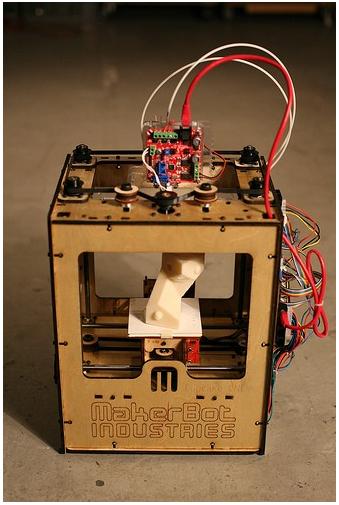
In the years ahead, energy prices will increase. So, it may make sense to produce small plastic items such as replacement parts locally rather than ordering those items from distant places. To explore the idea of re-localization, AuburnSIG has partnered with the Syracuse Innovation Guild to build a MakerBot kit. Once it is put together, the hope is that a machine could make small plastic parts on demand. That would potentially save energy, packaging and ordering time for plastic items. One use might be for making replacement parts for items that currently are not cost effective to repair.

The parts produced by these printers may not be as stylish as true injection mold but they can function quite well. For example, the black part is not as smooth as it's original on the left, but it is built heavier. Read a story about a person who used just such a machine to produce this part for his dishwasher. There is also this youtube video about another home repair that was done with a makerbot. The areas of open-source OS systems, 3-d printing and renewable materials give hope that our technological infrastructure can be maintained in the years ahead in spite of declining energy resources and economic problems.

Monday, October 25, 2010

Getting involved with local government

I find it amazing that "town meetings" are not more well attended. It's a rare opportunity for an average person to voice specific concerns and possible remedies in some detail to people who might be able to do something. Since I strongly believe in participatory local government, I made a special effort to attend even if I didn't have a specific agenda.

Before the meeting, I chatted with Mayor Quill. He was aware of at least some Hydrofracking issues. I did inform him that even using pure water to hydrofrack had problems since it would force god-knows what to different parts of the ground elsewhere. Due to that reason, hydrofracking of any sort should be approached with a great deal of caution. For now was not in favor of it. However, he was in favor of developing conventional gas wells around the area. During the meeting, I also learned that the landfill bio-gas experiment had disappointing results. So the city wants to fuel it's power plant with new conventional gas wells. The city was also trying to develop hydro resources but it is slow going due to technical and possibly other reasons that were not explained in detail. The city does use some self-generated electricity for it's own use. The excess capacity is currently sold to our local electric company NYSEG. The former mayor was also at the meeting. He suggested that this inexpensive source of electricity should be used for stimulating specific businesses instead of keeping overall city government costs down.

When it came time to publicly voice specific concerns, I stated that we should make an effort to keep the city walker and biker friendly. We don't want to "fail" at it. Specifically, give some thought to bicycles when planning street repairs. I also put in a plug for keeping sidewalks in repair for electric wheelchair people who I see making their way along some rather busy streets! I was pleased to hear that the city planners are aware of those issues and they will continue to try to keep the streets wide where possible. Although homeowners pay for sidewalk repairs themselves, the city maintains wheel-chair accessible sidewalk corner slabs on each intersection at no cost. Plus they are building additional walkways along the river. One question I had was if some of the parking garage space could be assigned to bicyclists. They currently can only park outside of the parking garage and some people do ride in the rain. I also asked one of the planners if a new bike path to WalMart might be possible. Promoting Walmart isn't the goal. It's to get people on bicycles. My hope is that they might do so if they can easily reach popular destinations such as the bus hub and shopping centers.

Saturday, October 2, 2010

Intentional Communities

The Westcott community center in Syracuse was an active place this Saturday. This weekend, the "The Alchemical Nursery" was giving out free bags of bulbs to people who live in the community. As a result, each spring, flowers bloom in front of homes and apartments of those who participate! The center also was distributing recycle bins provided by the county and of course there were organic vegetables for purchase.

Although this was all good, I came to Syracuse for a different reason. The Alchemical Nursery people were also showing a film and hosted a Q&A panel about "intentional communities". These come in more forms and are much more numerous than I was initially aware of. Some intentional communities seem nothing more than weak homeowner associations while others manage member activities to an almost cultish level. Communities tend to change over time and members themselves tend to change too. Some communities deal with aging members simply by limiting membership to younger members while others have gone as far as setting up assisted living arrangements. One thing in common with the successful communities is that there is usually some common theme that binds the members together which is above a purely economic benefit.

The topic is much more complicated than this blog posting can cover. The main message I got from the movie and Q&A panel was that successful intentional communities do exist and no two are the same. The lifestyle can be quite rewarding but a planned community requires a lot of work to maintain. If you want to check out what types of intentional communities are out there, check out http://www.ic.org/

Saturday, September 11, 2010

Low cost water heater

What if you knew, absolutely, that high energy demand and inelastic supply were to cause energy prices to quadruple 3 months from now? Would that not change your incentive to act now? We may not know the specific day this will happen, but even the most optimistic predictions show very high prices will happen in less than 10 years. At some point, high energy prices will be months or even days away! So, why risk the wait?

IMHO, There needs to be a major effort to adopt renewable technologies now. One such solution to high energy costs is a low cost, high capacity, drainback solar water heater. The high-capacity unit featured from the site BuildItSolar.com looks like it's ideal for this climate. It's simple, low tech and low in cost if installed by the homeowner. Just build the unit, place by the side of the house, add siding, pipe it in and it could provide years of service generating hot water!

Barriers to ecologically friendly ways of doing things are not always about the technology. It may also be about cultural and governmental bias as well. If you would like to exchange tips for how to gain energy independence while still playing within the rules, have a chat over some Green Drinks (at Green Drinks.org)!